
We believe that there are two categories of people in life. Those who never have a need for a court affidavit and would probably never need to search for how to get a court affidavit in Nigeria, and you, who somehow have landed on this page.
We have been in your position, and by the end of this article, we hope to have guided you on the most effective way to obtain a court affidavit in Nigeria.
Legal Importance of Court Affidavit in Nigeria
A court affidavit is a written, voluntary statement of facts that is sworn to or affirmed under oath before a legally authorized person, such as a Commissioner for Oaths or a Notary Public.
It serves as documentary evidence, allowing courts and institutions to establish facts without the immediate need for oral testimony from individuals.
A court affidavit is important in Nigeria for the following reasons;
- Evidential Value in Court: In some proceedings, such as special proceedings like Fundamental Human Rights enforcements and habeas corpus, and interlocutory proceedings, affidavits serve as primary evidence by which the court establishes facts.
- Proof of Key Personal Facts: Affidavits can act as substitutes for missing records, such as Statutory Declarations of Age (replacing birth certificates), declarations of marriage/bachelorhood, or proof of death.
- Resolution of Identification Issues: Affidavits are used to confirm that different names on various documents belong to “the same person”. For example, it can be used in cases of a change of name after marriage or name corrections due to spelling errors.
- Documentation of Lost Items: When vital documents such as international passports, driver’s licenses, or educational credentials are lost, affidavits are required to formally declare the loss of such documents.
- Authorization and Compliance: In some commercial and legal transactions, affidavits are used to support applications, such as affidavits in support of a motion, affidavits of service, or affidavits confirming the authority of a representative.
Types of Court Affidavits in Nigeria
Affidavits in Nigeria can be classified into two types: Personal or General affidavits and Court-related affidavits. We will look at both of them and their examples.
1. Personal or General Affidavits
These are affidavits that are commonly needed for administrative, personal, or corporate matters. They are not used for court proceedings. Some examples are:
2. Affidavit of Change of Name
This is sworn to confirm that a person has made a change of name, typically done after marriage or following a personal decision. It establishes that the old and new names belong to the same person and allows for consistency across legal and official records.
3. Affidavit of Loss
This declares that a specific item or document, such as a school certificate, license, or ID, is lost, stolen, or destroyed. It is often used to secure a replacement.
4. Statutory Declaration of Age
This is a document sworn to that officially confirms an individual’s date of birth when a birth certificate is unavailable or lost. It is largely accepted for official purposes like employment or school registration.
5. Affidavit of Bachelorhood/Spinsterhood
This declares that an individual is single, has never been married, and is free to contract marriage. It is commonly used for marriage registry requirements, visa applications, and international marriages.
6. Affidavit of Good Conduct
This attests to a person’s behaviour, certifying that they have no criminal record, maintain good moral character, and/or promise to follow specific regulations. It is often required for school, employment, or immigration purposes.
7. Affidavit of Single Parenthood
This declares an individual’s status as a sole parent (due to divorce, death of a spouse, or unmarried status), and is often used for school admissions, international passports, or legal guardianship.
8. Court-Related Affidavits
These affidavits form part of court processes to support filings and are governed by the Evidence Act:
9. Affidavit in Support of Motion
This is a written statement of facts used to explain why the court should grant a motion (a request made, asking the court to do something). This motion could be to dismiss a case, grant summary judgment, permit evidence, etc.
10. Verifying Affidavit
As the name implies, a verifying affidavit is used to verify or confirm the truth of facts, typically in petitions, like divorce or personal injury claims, to ensure the facts are accurate.
11. Affidavit of Service
An affidavit of service, or proof of service, is a sworn legal document signed by a process server, usually a bailiff or solicitor, to confirm that court documents were duly served to a specific person, company, or entity.
It ensures that the court has proof that all parties involved in a lawsuit were properly served with the necessary documents.
12. Affidavit in Support of Fundamental Rights
These are used in Nigeria to initiate legal action on matters of Fundamental Rights. Among other things, it must detail the applicant’s identity, specific rights violated, and the facts supporting the claim.
13. Counter-Affidavit
This is used in legal proceedings in response to an affidavit previously filed by an opposing party. It acts as a defence against motions or applications asserting different facts to persuade the court to rule in a party’s favour.
How To Get Court Affidavit in Nigeria
There are currently two ways to get a court affidavit in Nigeria. The first is the manual process, where you physically visit a High Court/Magistrate Court to depose your statement before a Commissioner for Oaths.
The other is through the use of the Federal High Court e-Affidavit Portal to get digital, notarized affidavits.
With either of the processes you decide to follow, there are key requirements needed to get your affidavit.
Requirements to Get Court Affidavit in Nigeria
For every official registration to be done, there is a checklist required to be ticked. Whether it is for EFCC SCUML, opening a bank account, or any other registration, you need to meet key requirements.
Likewise, these are the documents and information you must prepare and verify before applying for an affidavit. They include:
- Valid Means of Identification: This could be your National ID or NIN Card/Slip, Driver’s License, Voter’s Card, or International Passport.
- Supporting Documents: This is any document that is required for the specific type of affidavit that you are deposing. For example, a police report may be required for a loss of documents, and newspaper publication clippings for a change of name.
- A recent passport photograph.
- A clear and legible picture of your signature on a plain white background.
- Physical presence: This is for the manual process. You must be physically present to depose on the affidavit.
Manual Process
If you prefer to go the manual way and obtain your affidavit in person, you can follow this process:
- Visit any Federal High Court, State High Court, or Magistrate Court close to you and locate the Affidavit/Registry department.
- Ask for an affidavit form from the staff and draft it. It is advisable to explain your case to the staff so that you will be guided on how best to draft your affidavit. You can also bring your already drafted affidavit.
- Depose before the Commissioner for Oaths by signing and attesting to the document.
- Pay the prescribed fees and ensure that the document is officially stamped and sealed.
Online Process to Get E-Court Affidavit in Nigeria
This process is relatively faster than the manual process and is less cumbersome, helping you avoid long queues. When successful, it provides a legally recognized and digitally signed document with a QR code for verification.
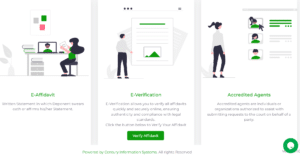
- Visit the Portal: Go to the FHC E-Affidavit Portal.
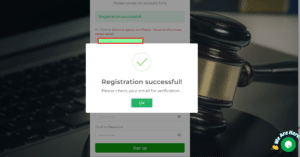
- Create Account: Register with your name (the way it should appear on your affidavit), phone number, and email. A verification email will be sent to your email address. After your account is verified, sign in.
- Update your Profile with the required information.
- Select the affidavit type from the options provided and enter your details correctly on the form. Ensure there are no typos.
- Upload the required documents and submit your application.
- Before making payment, ensure you preview your draft affidavit to check for errors or corrections that may be needed to be made.
- Proceed to make payment of the processing fees via Paystack or Remita.
- After processing, download your signed and stamped affidavit, which can be verified online, using the FHC E-Affidavit Portal. A copy of your affidavit will also be sent to your email address.
Cost of Court Affidavit in Nigeria
The cost of a court affidavit in Nigeria can range from ₦2,000 to ₦5,000, depending on a few key factors. These factors include:
- Court Type: Magistrate courts are generally cheaper than High Courts.
- Hidden Fees: In person, you may pay court clerks additional fees to draft or prepare the document.
- Type of Affidavit: Complex documents or those requiring specific, detailed documentation may cost more.
Common Court Affidavit Mistakes
Here are some common mistakes with applying for a court affidavit
- Giving False Information: Every statement in an affidavit must be true, as false declarations can lead to serious legal consequences, including perjury.
- Using Wrong Names or Inconsistent Spelling: Names on your affidavit should match your official documents exactly. NIN card, International passport, birth certificates, etc, must have the exact name on the affidavit.
- Failing to Clearly State the Purpose: Whether you are drafting an affidavit for a change of name, a declaration of age, loss of documents, or for any other reason, the reason must be specific and clear. Your affidavit must also be brief, direct, and based on facts, not emotions, assumptions, or unnecessary details.
- Moreso, these facts must be facts that you personally know, not rumours, assumptions, or hearsay.
- Missing Affidavit Essentials: Without a proper court stamp, signature, jurat, or oath section, the affidavit may not be legally recognized. For the e-affidavit, you can verify your digital affidavit through the same portal by using your reference number.
- Absence of Supporting Documents: As mentioned earlier, some affidavits require supporting documents like police reports, birth certificates, or other records for verification. Ensure you have all the required documents valid and ready.
- Hasty Submission: The process to get an affidavit may get frustrating, especially the manual process, but that should not force you to submit it hastily or shabbily. Ensure you review your draft intimately before paying for, deposing, or signing it. Wrong dates, spelling errors, and incorrect details can cause rejection or delay.
With correct and valid details, it can take a few minutes to an hour through the digital platform. Physical visits to a court may take a few hours, depending on queue lengths and the availability of the Commissioner for Oaths.
Frequently Asked Questions
How much does a court affidavit cost in Nigeria?
The cost of an affidavit largely depends on the type of affidavit you seek to get and the process you follow to get it. While we can give you a range, you should confirm through the court or through the portal.
Can I use one affidavit for multiple purposes?
Yes and No. One affidavit can sometimes be used for multiple, similar purposes, such as an "Affidavit of One and the Same Person" to fix name discrepancies across several documents, e.g., birth certificate, passport, bank accounts.
However, affidavits are generally tailored to specific facts. So, a single document may not be acceptable for another completely different legal issue or court case.
How do I get a digital court affidavit?
To get your digital affidavit, you have to visit the approved e-affidavit portal, fill in your details, upload any required documents, and make a payment.
Follow the guidelines we have provided in this article for an easy and smooth process to get your court affidavit online.
How long does it take to get an affidavit?
A court affidavit in Nigeria can be obtained within 30 minutes to a few days, depending on the process you follow.
What do I need for an affidavit in Nigeria?
A valid government-issued means of Identification, a clear and legible picture of your signature on a plain white background, a recent passport photograph, and any other document as may be required.
Conclusion
Conclusion
If you have read to this point, then you are most certainly in the second category of people we mentioned.
From all we've said, getting a court affidavit has been made less complex and so much easier. With the introduction of the e-affidavit, your journey to getting your desired affidavit has been shortened.
We hope this article has been helpful and demystifying enough for you. Feel free to reach out to us or drop a comment if you have questions, suggestions, or if you need any of our other services.


Comments 0
No comments yet
Be the first to share your thoughts.
Leave a Comment
Your email will not be published.